

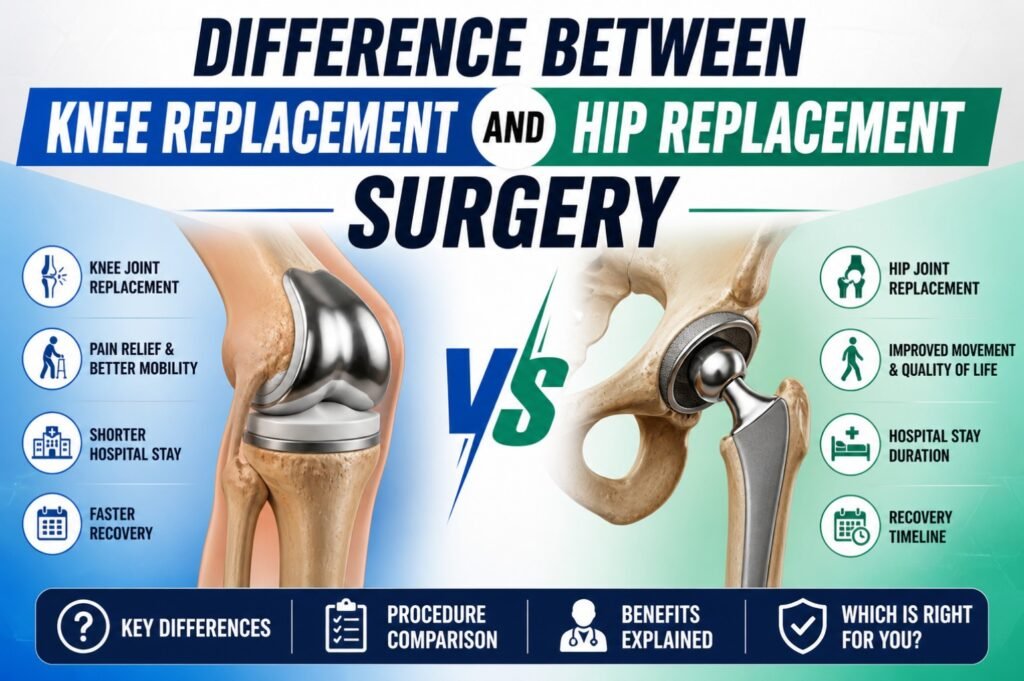
Difference Between Knee Replacement and Hip Replacement Surgery
Joint replacement surgery is a highly effective solution for patients suffering from severe joint pain and mobility issues. The two most common types are knee replacement and hip replacement. While both aim to relieve pain and restore function, they differ in several important ways.
What is Knee Replacement Surgery?
Knee replacement (Total Knee Replacement – TKR) involves replacing the damaged surfaces of the knee joint with artificial components made of metal and plastic.
It is commonly recommended for patients with:
- Severe arthritis
- Chronic knee pain
- Difficulty walking, climbing stairs, or standing
If you are considering knee replacement surgery in Gorakhpur, it is important to consult an experienced orthopaedic specialist who can assess your condition and guide you toward the most suitable treatment plan.

What is Hip Replacement Surgery?
Hip replacement (Total Hip Replacement – THR) involves replacing the damaged hip joint (ball and socket) with artificial implants.
It is usually advised for:
- Hip arthritis
- Fractures
- Severe stiffness and pain in the hip joint
Patients seeking hip replacement surgery in Gorakhpur should look for a surgeon with expertise in advanced implant techniques, ensuring a faster recovery and long-lasting results.
Key Differences Between Knee and Hip Replacement
- Joint Structure
- Knee Joint: A hinge joint (like a door) that mainly moves forward and backward
- Hip Joint: A ball-and-socket joint that allows movement in multiple directions
- Surgical Procedure
- Knee Replacement: Reshaping the ends of the femur and tibia, and placing implants
- Hip Replacement: Replacing the ball (femoral head) and socket (acetabulum)
- Recovery Time
- Knee Replacement:
- Recovery is usually slower
- Requires intensive physiotherapy
- Full recovery may take 3–6 months
- Hip Replacement:
- Faster recovery in most cases
- Patients often walk sooner
- Full recovery may take 2–3 months
- Pain After Surgery
- Knee Replacement:
- Post-operative pain can be higher initially
- Requires strong rehabilitation effort
- Hip Replacement:
- Generally less painful after surgery
- Faster comfort improvement
- Range of Motion
- Knee: Limited natural movement (bending and straightening)
- Hip: Greater flexibility (rotation, sideways movement, etc.)
- Rehabilitation
- Knee Replacement:
- More demanding physiotherapy
- Focus on regaining bending and strength
- Hip Replacement:
- Easier rehabilitation
- Focus on walking and balance
- Risk of Dislocation
- Knee Replacement: Rare
- Hip Replacement: Slight risk of dislocation, especially in early recovery
- Long-Term Outcomes
Both surgeries:
- Provide excellent pain relief
- Improve quality of life
- Have long-lasting results (15–25 years in many cases)
Which Surgery is Better?
Neither is “better”—it depends on:
- Which joint is damaged
- Severity of symptoms
- Patient’s lifestyle and needs
A qualified orthopedic surgeon will evaluate and recommend the most suitable option.

Final Thoughts
Knee and hip replacement surgeries are life-changing procedures for patients suffering from chronic joint pain. While they differ in structure, recovery, and rehabilitation, both aim to restore mobility and improve quality of life.
Understanding these differences can help you feel more confident and prepared if surgery is recommended.
Whether you need knee replacement surgery in Gorakhpur or hip replacement surgery in Gorakhpur, the key is to choose a qualified and experienced orthopaedic surgeon who can personalise your care and help you return to an active, pain-free life.